Institutions, nations or more generally, bigger associations of people, ground their existence in core principles with a binding character. The strength of a stable institution is shown by various factors, including legitimacy, sovereignty, justice, a united people and the ability to adapt to varying externalities. These concepts, which are supposed to ground modern institutions, are expressed in words like freedom, security, peace-making, economic stability or common values. Although these notions differ, I will here take the liberty and summarize these principles in one single word, the Good, as they intend to foster the attempt to reach a state, in which society understands what ought to guide communal life and preserve its integrity.
I therefore argue that the pursuit of the Good can provide a durable foundation for institutions, however, only if, by pursuing it, the Good does not turn into a rigid moral or operational dogma. In order to further examine this claim, I will consult and contrast ideas about the Good from the Greek Philosopher Plato and the Chinese Philosopher Laozi, which have expressed a different understanding of the concept and thus find an answer to the question “What is the Good?”. Generally, it is assumed, that the discrepancies between different forms of governing, such as democratic, totalitarian or autocratic ways, do not matter, as the focus rather lies on non-systemic principles. That is to say, even certain non-democratic states, such as contemporary China, exhibit characteristics commonly associated with stable institutions, including longevity, sovereignty and administrative continuity. This essay therefore focuses not on forms of government but on the principles that ground them, as they later can be applied to many different notions of diverse systems.
To build a foundation from which to start the argumentation, I will briefly introduce the philosophers’ ideas.
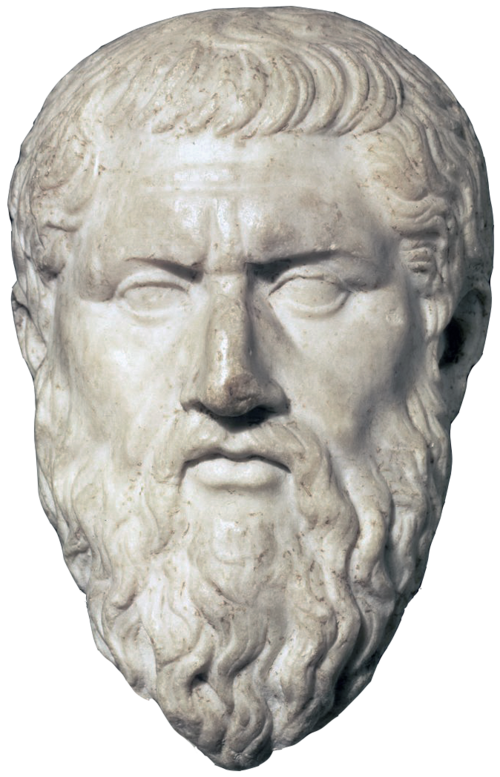
For Plato, the Good constitutes the ultimate ground of metaphysics (De Gennaro, 2019, 208). It is the idea of ideas, as it allows all other ideas to appear as intelligible. In this sense, the Good relates to Aletheia, because it allows, just as Aletheia does, beings to appear as what they truly are, rather than merely as shifting appearances. This unconcealing character removes abscondedness, meaning that one becomes capable of distinguishing between mere visible appearances and the deeper intelligibility through which things reveal their true essence. In a metaphoric way, the regime of shadows, which cover truth with a layer of obscurity, is displaced by disabscondedness, through which beings show themselves in a sense-giving manner. In Plato’s allegory of the cave, the sun symbolizes the source of unconcealment, just as the Good illuminates beings and makes their meaning accessible to understanding. Therefore, the Good ignites truth, as it reveals the being of things and thus stimulates human intelligence, through philosophical interrogation of the underlying meaning of things. The Good is “not only the “most” being [… ] but also the “highest” being” (De Gennaro, 2019, 210). These beings involve a gathering character, whose purpose is to ground. Thus, the Good is both an ontological concept (-onta, legein), since it grounds the being of things a theological concept (to theion), since it stands as the highest principle of intelligibility and is therefore “essence granting” (De Gennaro, 2019, 212). This leads to the conclusion that for Plato, institutions can endure only insofar, as they remain oriented towards this intelligible ground, rather than moving towards unstable appearances or immediate utility. As a consequence, Plato´s concern is that institutions are more likely to collapse, when the channel of governance is merely characterized by opinions, appetite or utility, rather than by insight into the Good itself, which would ultimately increase the threat of the formation of a tyranny and loss of justice (Plato, 1992, VI). Overall, the Good is a long living, infinite, unique and thus universal concept, as it does not change as time passes.
Although Laozi does not explicitly formulate a concept equivalent to Plato’s Good, but the translation indicates “the highest form of existence” (Ye and Zhu, 2024, 49), certain dimensions of Dao (“Way”) and how it finds expression in De (“Virtue”) (Chan, 2001), and Wuwei (“Nonaction”) can be interpreted as addressing a similar question concerning the ground of harmonious existence. This comparison therefore does not claim a conceptual identity between Plato and Laozi but rather examines how two fundamentally different traditions respond to the question of what grants structure, sustainability, and meaningful orientation to human life and institutions.
Mr. Ye and Mr. Zhu describe Dao as “artless, the complete, unbroken world, in which there is no knowledge, no discrimination, no competition.” (Ye and Zhu, 2024, 49). Laozi considers Dao to be the highest form of existence, to which humans can only have access to, if the curtain of abscondedness is lifted. Then, humans can enter into a domain of harmony in Dao, which is at first, and for the most part, the naturalness and freedom from human judgement, which he describes as human interference. Zhuangzi, a philosopher who carries Laozi’s logic, makes the concept more tangible with the story of the “useless tree” which states that an old tree was only able to reach a high age because its wood was of no use for humans. Thus, with non-action and in the natural state, not with domination, longevity and stability can be reached. The “useless tree” symbolizes a notion of being that escapes destruction precisely because it does not nourish instrumental utility in the first place. To conclude, the technically and operationally clumsy things often are ontologically and naturally ingenious and therefore part of the highest form of existence, when they reveal their truth character within the domain of wholeness. Laozi´s concern differs fundamentally from Plato´s. He fears the excessive ordering and constant intervention, estranging human beings from the natural harmony of Dao. Therefore, institutions decline not because of a lack of control but because rigid structures are imposed on life. Overall, in my view, the Chinese Dao is a comparatively pragmatic concept, adapting through time and personality and can be understood as a concept for a harmonic living together, rather than being a universal concept as the Good, described by Plato.
In the following, I will consider arguments which oppose the claim, that the Good can act as a reliable foundation for an association of people.
Firstly, leaning on the concept of Dao and Wuwei, the naturalness and absence of human judgement in order to reach sustainability, would not fit into today´s world, which changes its nature with great speed. Today´s world is characterized by a state, where non-action and ontological thinking, here the Good, are connected to a notion of failure, as modern societies tend to value efficiency, productivity and constant intervention. Thus, this world would be “ungood”, from a metaphysical point of view.
Moreover, it does not question the deeper meaning of human flourishing. Therefore, the natural ingenuity which would go hand in hand with nonaction and the “uselessness” of a thing, is not acknowledged as Laozi´s principle would appear politically passive or impractical. However, exactly this could be a stabilizing approach to calm down political intensity arising from substantially different points of view. The power of this seemingly paradoxical method of non-action, which may ultimately improve a conflictual situation, becomes transparent in the Japanese culture of arguing specifically in the concept of Ma. Ma can be performed within a heated discussion that struggles to find a way out because of multiple layers of emotions and accusations. It can be translated as “room in between”, “pause” or “interval”. However, its underlying meaning is not an empty absence of time and action, but rather a space within the subjective perception of time that allows thoughts to emerge without being occupied by further interventions. It enables thoughts to remain in a state of limbo, where no direction is predetermined. In this way, the common understanding of time as something that must constantly be filled with words, actions and force is partially suspended. New thoughts may then come to light and contribute to untangling a problem, as the domain of contingent pressures becomes narrower.
Secondly, now taking into consideration Plato´s concept of the Good, one has to regard the nature of the Good in the modern world, which is at first and for the most, operational, thus failing to meet the original Greek understanding of the concept of the Good. Therefore, as humans are on the one hand beings who can change their way of thinking and beliefs only in a lingering way, the change to an ontological and theological foundation would be of utopian (ou-topia = “no place”) nature and therefore unachievable. As Glaucon puts it, in a critique of the platonian Kallipolis (kalos-polis) an unachievable concept cannot be a eu-topia (“good place”) (Brown, 2003). On the other hand, the nature of the Good itself poses a challenge, as it is not a concept that lends itself easily to definition. As Socrates already suggests, this very difficulty impedes the simple implementation of the Good as a foundational charter for institutions.
Furthermore, if instead people proceed in the attempt to gain an adequate grasp of the Good by gathering opinions, this would only lead to an ugly, contingent image of the Good as the discrepancy between the knowledge about the sense of the Good and what seems to be of good character is too wide. However, it might be narrowed by becoming vigilant about the discrepancy and accepting that the Good cannot be treated like other concepts, as it goes beyond the trajectory of thought, that is normally applied to interrogate the sense of something. This way of thinking could also be a way of approaching social or economic problems where everything seems to be tangled. Accepting the difficulty and underlying complexity could ease the minds of the people, having to decide about how to proceed and make room for ideas to emerge from the, till this point, invisible domain. It might be added here that this process resembles the path of reaching a domain of harmony in Dao, which was paradoxically said to be a domain without knowledge. However, one might interpret Dao as a domain not lacking knowledge but having the ability to provide room, in which things can appear to humans.
Turning to the claim-supporting side of argumentation, I will now lay out Socrates’s Kallipolis in a different notion. The ground of modern institutions is mostly connected to economic wellbeing, granting safety, peace and the representation of values or interest. These fungible concepts are achievable by reasonable actions. The fact that Plato´s concept of the ideal city relies on the ruling of philosophers, which are supposed to secure the rule of reason, which is based on knowledge, which is stimulated by the Good, enables the fulfilment of those fungible needs in an ontological way (Brown, 2003). Thus, the previous argument against the claim is not fully-fledged as it does not consider this notion of Plato’s Good.
However, one might argue that the pursuit of the Good by philosophers could also justify authoritarianism (Popper, 1945). As philosophers are also only a certain group in society, they do not automatically have elevated rights. Thus, if one group claims privileged access to truth, or this is perceived to be in this way by a group, large enough to be publicly heard, firstly, plurality would disappear and secondly, the originally initiated striving for the Good would be displaced by a discussion about monopolies of ideas even if the notion of the idea is positive. Nevertheless, Popper´s argument is, at least to a certain extent, questionable, as the philosophers´ status and way of living in a society was anything but pervasive. Though, I introduced it to preserve controversy.
Secondly, it can be argued that the pursuit of the Good from Laozi´s perspective, as Dao, the naturalness and non-action could enable a flexible, minimalistic formation of institutions, which could develop more organic departmental structures, allowing individuals to act according to their natural capacities, rather than rigid prescriptions. Nevertheless, a possible complication, which needs to be acknowledged, is a lack of orientation, in order for a system to be able to secure the satisfaction of appetite, desires and safety. Therefore, a kind of formgiving, sense-transmitting figure is still needed, such that the practical applicability can be ensured. Overall, this again underlines the practicability of the Chinese concept.
Thirdly, the ground of an institution should always be a concept which lifts the contingency and makes the nature of things apparent, even if this might be painful at first. This pain can show itself in an effort to interrogate the sense of ideas, which requires education, time and openness, through non-action, to be surprised by the knowledge which might lift itself from abscondedness. But only when truth is pursued, a society can flourish and interact with other societies harmonically, thus, emerging in Dao. Pitching in Plato´s Good, the same requirement of truth would hold.
Moreover, not only the truth character is vital for the Good, but also the wholeness and richness. Concerning wholeness, the Good is not meant to give complete intelligibility of a thing, which grants the integrity of an idea. The pursuit of this integrity can be fostered by developing a certain simplicity within the domain of wholeness, when it comes to thinking about the practical implementation of the Good. This is of crucial importance for including each one who lives in the institution and might not have used time, interrogating the principles and their sense which ground the institution. Nonetheless, richness is equally important and the attempt to follow the route towards a pool of characterizing and diversifying notion of the institution or nation can be initiated by people in power, “guardians” (phylax) as Socrates called them. This not only enables the institution to be able to face and manage a wide range of challenges, but it also counteracts rigidity, as institutions especially become rigid, when their guiding principles harden into fixed doctrines and lose their openness towards changing reality.
The difficulty herby is, to find the right measure in order to satisfactory balance the grounding character and the ability to adapt, which includes viscosity of an institution. However, even though the majority of people believes that this measuring ultimately leads to a trade-off between stability and freedom to move, in reality, the guardians, or governmental representatives ensure a suitable solution. Plato therefore places the preservation of institutions not merely in laws but in the character of guardians. This character ought to contain wisdom, moderation, courage and lastly the orientation towards truth (Plato, 1992, VI). Supplementary to his findings, the capacity to endure overwhelm could be added. The number of tasks, politicians face is often too high, leading to an unsatisfied people and a negative image of politics and policies, implemented and polity. It might even be put as a failure of politics. Failing to address the original objectives because of a misleading strategy. In aspiration to change this image, one might consider looking back in time and consolidate ideas such as the Good and Dao, whose interrogation were already initiated by ancient philosophers. This change in perspective ought to be performed not with the intention to find a solution as quickly as possible, but with the strive to redefine modern politics, shaping our institutions.
In summary, although the concept of the Good is difficult to grasp or implement, I think it is even a necessary foundation for enduring institutions. Institutions decline not because they pursue the Good, but because they transform it into rigid doctrine and cease questioning its meaning. Both Plato's Good and Laozi's Dao indicate that sustainable institutions require a grounding principle that combines stability with openness to change. Therefore, the pursuit of the Good, understood as a continuous process of reflection rather than a fixed formula, provides a durable foundation for institutional longevity and adaptability.
No public comments yet. Be the first to contribute a thoughtful perspective.